
Sepher Yetsira Index
| |
| |
|
| |
|
The Stoic philosophers identified the seat of the soul as the Hegemonikon, the central facility
which receives and organizes the impressions of phantasia, or imagination, delivered by the senses.
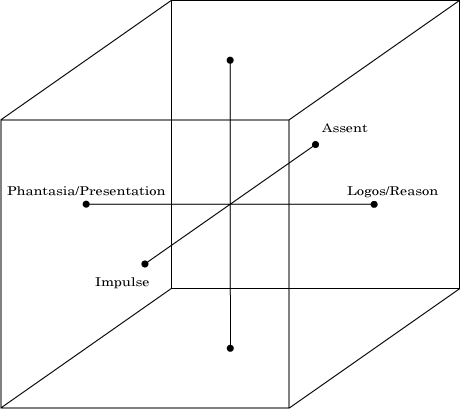
The Hegemonikon has four powers: phantasia, reason, impulse and assent. Phantasia may be either aesthetic (sensory) or mental reproductions of stored past phantasies. Impulse is a desire (an inclination to act) towards a phantasia and assent is the action performed after evaluation of the object of desire. Imagination won't be fully divorced from sensation until Hume. Yesterday's Imagination and Reason have become today's sensation and perception. In any case, we find our familiar axes of experience and life, defined by the polarities of sense-perception and future-past. Phantasia and Logos interact to produce inner and outer experience; Impulse is determined by past impressions and Assent determines the course of the future. See Metapsychology of the Cube of Space. | |
|
| |
| |
|
| |
|
hęgemonikon 'commanding faculty' of the soul
(psuchę); the centre of consciousness, the seat of all mental states, thought by the Stoics (and other ancients) to be located
in the heart. It manifests four mental powers: the capacity to receive
impressions, to
assent to them,
form intentions to act in response to them, and to do these things rationally.
The Discourses talk of keeping the prohairesis
in the right condition, and also of keeping the hęgemonikon in the right
condition, and for Epictetus these notions are essentially interchangeable.
|